PCOS, and what we do in place of birth control
A full walk through the testing, the food, and the plan that moves PCOS at the root.

PCOS is driven by insulin and androgens far more often than by anything reproductive. Birth control quiets the symptoms while both drivers continue, which is why symptoms return the month you stop.
Most women arrive with the same story. Irregular cycles, weight that will not move, hair where they do not want it and thinning where they do. They were handed a prescription for the pill and told to come back when they wanted a baby.
Chapter oneWhat PCOS actually is
PCOS gets filed as a reproductive condition because of where the symptoms show up. Underneath, it behaves like a metabolic one: insulin resistance drives androgen production, and androgens interrupt ovulation.
That order matters enormously, because it means the leverage is metabolic. Treating the ovaries while insulin runs high is working at the wrong end of the chain.
“PCOS is a metabolic condition that shows up in your cycle. Treat the metabolism and the cycle follows.
PCOS is a metabolic condition that shows up in your cycle. Treat the metabolism and the cycle follows.
Chapter twoThe testing we run first
Diagnosis usually happens on symptoms and an ultrasound, which is a start rather than a finish. What we want is the mechanism, because the mechanism differs between women who share the same label.
Fasting insulin is the number most often missing, and it is frequently the whole story. Ask for it by name, because a normal glucose alongside high insulin is the classic PCOS pattern.

Chapter threeInsulin is usually the engine
When insulin is high, your ovaries produce more testosterone. That is direct, well established, and it explains the acne, the hair, and the cycles that stopped arriving on schedule.
It also explains why weight loss feels impossible here rather than merely hard. High insulin blocks release, so effort produces very little, and the conclusion people draw is about themselves rather than about their physiology. The insulin explainer covers the mechanism in six minutes.
Chapter fourWhat we change about food
Food changes are the highest leverage thing available, and they are not a diet. Protein at every meal, carbohydrates paired rather than alone, and a genuine breakfast instead of coffee at eleven.
That combination lowers insulin within weeks, and lower insulin lowers androgens without a prescription. Most people notice skin and energy before their cycle changes.

Chapter fiveThe plan, in the order we build it
From there the plan stacks in order: food and movement, then targeted supplementation like inositol and magnesium, then medication where it earns its place, and hormone support only if the picture calls for it.
Birth control still has a role for some people, and choosing it with the mechanism understood is completely different from being handed it as the only option.
Chapter sixWhat the first year looks like
Cycles usually take three to six months to become predictable, because a follicle needs about ninety days to develop. Skin and energy move sooner, often in the first six weeks.
We retest at ninety days and track insulin, androgens, and cycle length together, because those three moving in the same direction is what tells us the root is actually shifting.
Bring your labs, especially fasting insulin if you have it. In half an hour we will know which driver is yours.
Where this connects
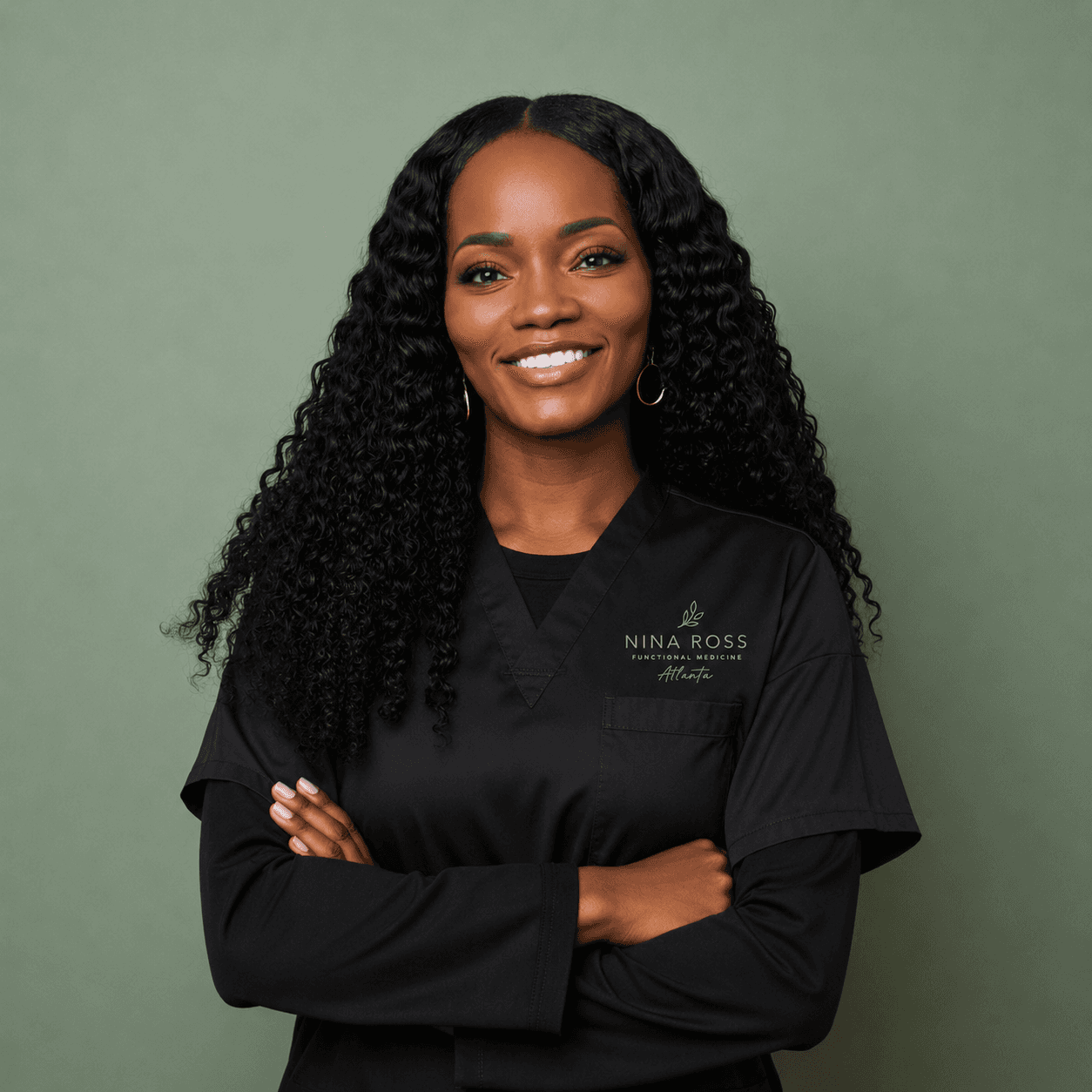
Dr. Nina reads the full panel, connects it to how you actually feel, and builds the plan from there. She sees patients in Atlanta and virtually worldwide.
More about Dr. Nina →


The long reads, chaptered so you can take them a piece at a time and come back where you left off.
All guides
Atlanta · Virtual care nationwide